📚 Written for food scientists & supplement formulators · 12 peer-reviewed references cited
Milk Protein Concentrate Bulk EU MPC 70 · 80 · 85 · Wholesale
The definitive technical resource for EU B2B buyers of milk protein concentrate. MPC spectrum (SMP→MPI), casein micelle structure SVG, ultrafiltration production process (8 steps), WPN heat-treatment guide, DIAAS 1.18 vs 7 proteins, MPC vs sodium caseinate table (10 parameters), bi-phasic kinetics chart, solubility troubleshooting, 6-application matrix, buyer's CoA checklist, and 16 deep-technical FAQ answers.
FDCM Technical Editorial · Last reviewed: May 2025
This page is written at food scientist and supplement formulator level. All quantitative claims are referenced to peer-reviewed literature, FAO publications, or EU Regulations as indicated throughout the text. Batch-specific values must be verified with CoA.
MPC 70, 80, 85 spectrum — from Skimmed Milk Powder to Milk Protein Isolate
Milk protein concentrate is a family of dairy ingredients defined by protein content. Understanding where MPC 70, MPC 80 and MPC 85 sit on the spectrum from SMP (34% protein) to MPI 90 (90% protein) is essential for grade selection.
How ultrafiltration produces MPC — what the membrane does
Ultrafiltration (UF) uses membranes with molecular weight cut-off (MWCO) of 10,000–30,000 Da. Skim milk proteins — caseins (24–250 kDa aggregates) and whey proteins (14–66 kDa) — are too large to pass through the membrane and concentrate in the retentate. Lactose (342 Da), water, and most minerals pass freely as permeate. The protein content of the retentate increases as more permeate is removed. Adding water to the retentate (diafiltration) washes out residual lactose, taking product from MPC 70 to MPC 85 or MPI 90.
Why the 80:20 ratio is preserved: Unlike acid precipitation (which selectively precipitates casein) or rennet treatment (which cleaves kappa-casein), ultrafiltration is non-selective between casein and whey. Both protein types are retained together in the native ratio found in skim milk — 80% casein, 20% whey.
MPC vs other dairy proteins — selection guide
MPC 80: Primary choice for protein bars, nutritional beverages, supplements, clinical nutrition. Best balance of protein, functionality and cost.
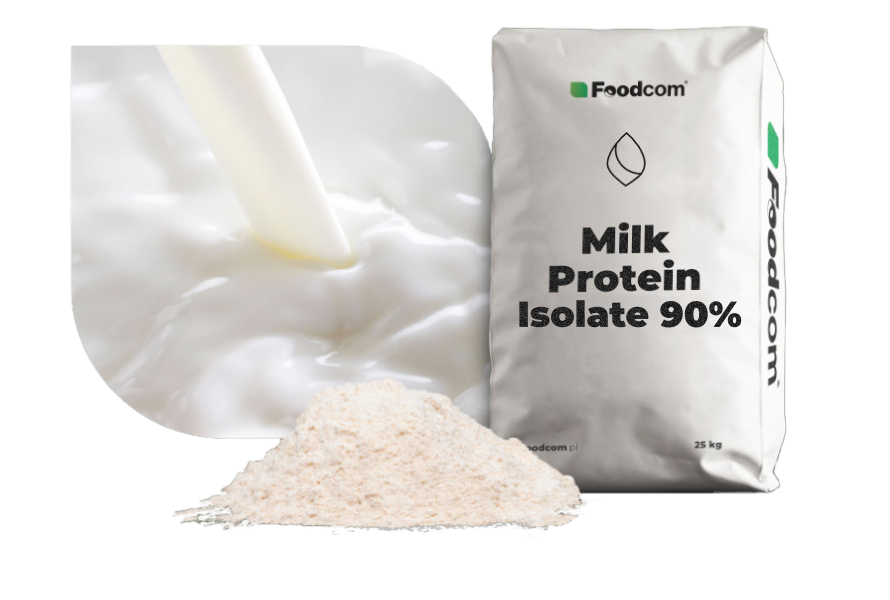
MPC 85 / MPI 90: Very high protein, very low lactose required — infant formula, clinical, premium high-protein products (>30g protein/serving).
WPC 80: Post-workout applications only. Maximum leucine spike in minimum time. Not for sustained protein delivery or pre-sleep use.
Sodium Caseinate: Applications requiring excellent cold-water solubility at any pH and temperature — coffee whiteners, soups, sauces, emulsification. See MPC vs Caseinate comparison below.
Mulvihill & Ennis (2003), International Dairy Journal; Foegeding & Davis (2011), Food Hydrocolloids.
8-step production process — click any step for details
How milk protein concentrate is made — raw milk to spray-dried MPC powder
Understanding the production process explains why MPC behaves the way it does — why WPN index matters, why aged MPC loses solubility, why diafiltration determines grade, and why spray drying conditions set the Maillard risk. Click any step for the technical detail.
🐄
Raw Milk Reception
Step 1
⚙️
Separation & Skimming
Step 2
🌡️
Pasteurisation
Step 3
🔬
Ultrafiltration (UF)
Step 4
💧
Diafiltration
Step 5
♨️
Evaporation
Step 6
💨
Spray Drying
Step 7
📦
Packaging
Step 8
Step 1: Raw Milk Reception — Bovine raw milk arrives at the dairy processing plant. Initial quality testing: somatic cell count, total bacterial count, inhibitory substances (antibiotics), fat/protein/lactose composition. Temperature on arrival must be <4°C.
Step 2: Separation & Skimming — Centrifugal separation removes fat fraction at 55-60°C. Output: skim milk (~0.05% fat) and cream (40-45% fat). The cream is processed separately. Skim milk proceeds to protein concentration.
Step 3: Pasteurisation — Skim milk pasteurised at 72°C/15s (HTST). This is where WPN index is first established - low-heat MPC requires minimum heat here to preserve native whey proteins (WPN >6).
Step 4: Ultrafiltration (UF) — The core step. Skim milk is pumped under pressure (2-8 bar) across a UF membrane (MWCO 10,000-30,000 Da). Membrane retains all proteins (caseins 24-250 kDa, whey proteins 14-66 kDa) while allowing lactose (342 Da), water, and small minerals to pass as permeate.
Step 5: Diafiltration — To achieve protein >MPC 70, fresh water is added to the retentate while UF continues. Each diavolume reduces lactose ~63%. MPC 70 to MPC 85 requires approximately 3-4 diavolumes. Diafiltration is energy-intensive and drives the price premium of MPC 85.
Step 6: Evaporation — Liquid retentate (15-25% total solids) is pre-concentrated in a multi-effect evaporator at low temperature (under vacuum, 55-65°C) to 40-50% total solids, reducing spray dryer load significantly.
Step 7: Spray Drying — The concentrate is atomised in a spray dryer. Inlet air: 160-210°C; outlet: 75-95°C. The inlet/outlet temperature profile determines the WPN index. Low-heat MPC = lower inlet temps. Output moisture <5%.
Step 8: Packaging — Cooled to <30°C before packing. Standard: 25 kg multi-wall kraft sacks with PE liner. Premium: aluminium foil laminate for moisture-sensitive use. CoA sampling here - each batch tested before release.
Casein micelle structure — SVG diagram
Casein micelle structure in MPC — why the intact micelle matters
MPC produced by ultrafiltration preserves the native casein micelle structure. Understanding what a casein micelle is — its subunit architecture, colloidal calcium phosphate nanoclusters, and kappa-casein corona — explains MPC's gel-forming behaviour, heat sensitivity, solubility challenges and calcium content.
Submicelle (alpha/beta casein)
CaP nanocluster
kappa-casein (corona)
Micelle architecture — what each component does
Submicelles (core): The casein micelle (~150–300 nm diameter) consists of aggregated submicelles (15–40 nm), each containing alpha-s1, alpha-s2, and beta-casein molecules. These are held together by hydrophobic interactions and calcium bridges. The submicelle core is the protein matrix that forms the gel when acid is applied at pH 4.6 (isoelectric point).
Colloidal Calcium Phosphate (CaP) nanoclusters: Small mineral deposits (approximately 2–5 nm) of calcium phosphate that cross-link casein submicelles, contributing structural integrity. This is why MPC retains ~1,100 mg calcium per 100g protein — the calcium is part of the micelle structure, not added. Disrupting these cross-links (with EDTA, citrate, or extreme pH) dissolves the micelle.
kappa-casein corona: kappa-casein is hydrophilic on its C-terminal domain (caseinomacropeptide, CMP) and anchors to the micelle surface, forming a brush-like layer that provides steric stabilisation against aggregation. This is what keeps casein micelles dispersed in milk at pH 6.7. When kappa-casein is cleaved (by chymosin in cheese making) or the corona collapses (at pH 4.6), the micelles lose stability and aggregate — forming the curd.
Why MPC forms a gel in the stomach: Gastric acid lowers stomach pH to ~1.5–3.5. As pH approaches 4.6 (casein isoelectric point), the electrostatic repulsion between casein micelles decreases and CaP cross-links reform. Micelles aggregate into a soft gel matrix that slows gastric emptying — extending the satiety signal and sustaining amino acid release. This gel-forming behaviour is absent in sodium caseinate (disrupted micelle) and WPC (no casein).
de Kruif CG, Huppertz T, Urban VS, Petukhov AV (2012). Casein micelles and their internal structure. Advances in Colloid and Interface Science, 171–172, 36–52.
Head-to-head comparison — 10 parameters
Milk protein concentrate vs sodium caseinate — which to choose?
MPC and sodium caseinate are both casein-dominant dairy ingredients, but they differ fundamentally in structure, functionality, and application suitability. This is the most frequently confused comparison in dairy ingredient selection.
Parameter
MPC 80
Sodium Caseinate
Practical note
Casein:Whey ratio
80:20 (native milk ratio)WIN
~100:0 (casein only)
MPC preserves both fractions; caseinate loses whey entirely
Digestion kinetics
Bi-phasic: whey peak 30-60 min + casein plateau 3-6hWIN
Mono-phasic: slow, sustained release only 2-5h
MPC superior for all-day; caseinate for pre-sleep
DIAAS score
~1.18 (MPC 80)WIN
~1.03 (sodium caseinate)
MPC whey fraction elevates DIAAS vs pure casein
Cold-water solubility
Good fresh (pH>=6.5, 40-50 deg C) - age sensitive
Excellent - cold water, any pH 6-9, 24+ monthsWIN
Caseinate disrupted micelle = superior solubility
Heat stability
Moderate - whey denatures above 65 deg C
Excellent - no whey proteins to denatureWIN
Caseinate preferred for UHT RTD, soups, sauces
Acid gel formation
Yes - curd at pH 4.6 (stomach). Bar texture + satiety.WIN
No - disrupted micelle, no gel under acid
MPC gel formation = satiety, bar texture
Emulsification
Moderate - intact micelle limits surface activity
Excellent - best dairy emulsifierWIN
Caseinate used in coffee whiteners, soups, meat analogs
Calcium content
High: ~1,100 mg/100g protein (native CaP)WIN
Low: ~100-200 mg/100g (Ca removed in alkali)
MPC retains native colloidal calcium phosphate
Lactose
~5g/100g (MPC 80) - traces remain
<0.1g/100g - essentially lactose-freeWIN
Caseinate preferred for strict lactose-free labelling
Price (relative)
Similar - mid-tier EUR/kg protein
Similar or slightly higherTIE
Both comparable - caseinate slightly dearer in EU
How sodium caseinate differs structurally from MPC
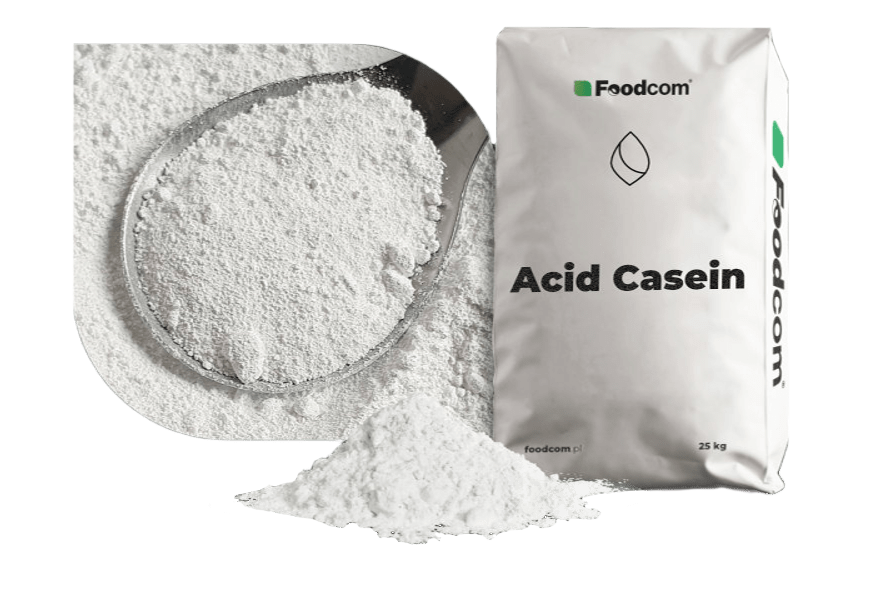
Sodium caseinate is produced by acid precipitation of casein from skim milk (forming acid casein), followed by resolubilisation in sodium hydroxide. This process completely disrupts the native casein micelle structure: the colloidal calcium phosphate nanoclusters are dissolved, the kappa-casein corona is lost, and the individual casein molecules are re-dispersed as sodium salts. The result is a protein that is highly soluble (micellar structure gone — no aggregation) but has lost gel-forming ability, calcium content, and the whey protein fraction entirely.
MPC produced by ultrafiltration preserves the native micelle intact — CaP nanoclusters, kappa-casein corona, and the 20% whey fraction all remain. This is why MPC behaves so differently from sodium caseinate despite both being casein-rich.
Application decision guide: MPC vs Caseinate
Choose MPC when: bi-phasic digestion is required; gel formation is beneficial (protein bars, satiety); calcium content matters (clinical, bone health claims); natural 80:20 casein:whey ratio is part of the product positioning; infant formula (WPN index compliant).
Choose Sodium Caseinate when: cold-water solubility is critical (RTD beverages, soups, coffee whiteners); heat stability under UHT conditions; emulsification (meat analogs, processed cheese); strict lactose-free labelling required (<0.1g/100g); long-term storage without solubility loss (24+ months).
Combine both when: protein bar with RTD companion — bars use MPC (texture), RTD uses caseinate (solubility). Clinical nutrition with both sustained release (MPC) and full cold-mix dispersibility (caseinate blend).
FDCM stocks both MPC/MPI and sodium caseinate from EU warehouses. contact@fdcm.eu
Casein:Whey protein composition — Chart.js
Casein:Whey ratio explorer — why MPC 80 mirrors whole milk
The 80:20 casein:whey ratio in MPC is identical to whole bovine milk — the biological reference. This determines digestion kinetics, gel behaviour, heat stability and DIAAS. Click any card to see the ratio.
WPN index — Whey Protein Nitrogen — heat treatment classification
WPN heat-stability guide — low, medium and high heat MPC explained
The WPN index determines which applications MPC is suitable for. Specifying the wrong WPN grade causes RTD sedimentation, infant formula rejection, and bar texture defects.
Low heat
WPN index: >6.0
Temperature
65–72°C
Hold
15–30s
Maillard
Minimal
Solubility
Excellent
Applications: Infant formulaNutritional RTD beveragesPremium protein powdersAcidified dairy drinks
Minimal heat denaturation — whey proteins largely native. Maximum functionality and nutritional value. Required for infant formula grade.
Extensive whey denaturation. Reduced solubility — not suitable for beverages. Maillard browning significant. Lower cost due to reduced processing demands.
CoA note: WPN index is not always included in a standard MPC CoA — request it explicitly for RTD and infant formula applications. FDCM provides WPN documentation on request. contact@fdcm.eu
WPN index method: IDF Standard 173. Classification system: ADPI Heat Classification for Milk Powder.
Protein quality — PDCAAS & DIAAS — peer-reviewed data
DIAAS 1.18 — milk protein concentrate vs 7 protein sources compared
The Digestible Indispensable Amino Acid Score (DIAAS) is the FAO-recommended method (FAO 2013). Unlike PDCAAS, DIAAS is not truncated at 1.0 and uses true ileal digestibility — making it the most accurate protein quality metric. MPC 80 scores 1.18.
Protein Source
PDCAAS
DIAAS
Leu %
BCAA %
Reference
Milk Protein Concentrate (MPC 80)
1.00
1.18
9.0%
21.5%
FAO 2013; Rutherfurd et al. 2015
WPC 80 (Whey Protein Conc.)
1.00
1.09
10.9%
23.5%
FAO 2013
Milk Protein Isolate (MPI 90)
1.00
1.21
9.1%
21.8%
Rutherfurd et al. 2015
Egg White Powder
1.00
1.13
8.6%
20.8%
FAO 2013
Soy Protein Isolate
0.99
0.90
7.8%
18.1%
FAO 2013
Pea Protein Isolate
0.82
0.64
8.0%
18.6%
INRAE 2022
Wheat Gluten
0.42
0.45
6.8%
15.0%
FAO 2013
What DIAAS 1.18 means practically
A DIAAS of 1.18 means MPC provides 118% of the FAO reference amino acid requirement per gram of protein, after accounting for true ileal digestibility losses. To deliver the same indispensable amino acid intake as 25g MPC protein, you need approximately 46g pea protein (DIAAS 0.64) — 84% more. For clinical formulas and infant nutrition where protein efficiency per gram directly impacts cost and dosing, this gap is significant.
Why DIAAS replaced PDCAAS in 2013
PDCAAS (FAO 1991) used fecal digestibility (overestimates true absorption) and truncated all scores at 1.0 (hid differences between high-quality proteins). DIAAS (FAO 2013) uses true ileal digestibility and allows scores above 1.0. Plant proteins score lower under DIAAS than PDCAAS because their lower ileal digestibility is correctly measured. The gap between dairy and plant proteins is larger under DIAAS.
Rutherfurd SM et al. (2015). Protein digestibility-corrected amino acid scores and digestible indispensable amino acid scores differentially describe protein quality in growing male rats. J Nutr. 145(2):372–9. doi:10.3945/jn.114.195438
Plasma amino acid kinetics — based on published RCT data
Bi-phasic digestion kinetics — MPC 80 vs WPC, casein and soy protein
MPC 80's bi-phasic profile — combining WPC's early leucine spike with casein's sustained plateau — is unique among single-ingredient protein sources. Relative plasma leucine concentration over 360 minutes post-ingestion. Fasted baseline = 1.0×.
Relative plasma leucine × fasted baseline · time post-ingestion (minutes) · based on Boirie et al. 1997; Dangin et al. 2001; Lacroix et al. 2006
MPC 80 (bi-phasic)
WPC 80 (fast)
Micellar Casein (slow)
Soy Protein Isolate
Schematic based on published kinetics data. Boirie Y et al. (1997) PNAS 94(26):14930; Dangin M et al. (2001) Am J Physiol 280(2):E340; Lacroix M et al. (2006) Am J Clin Nutr 84(5):1043. Individual variation is high.
Solubility troubleshooting — scroll to animate bars
MPC cold-water solubility guide — pH, temperature and ageing effects
MPC's solubility challenges are largely avoidable with correct formulation and fresh product. pH minimum at 4.6 (isoelectric point). Age-related insolubility from casein micelle aggregation over 3–6 months.
Solubility vs pH (MPC 80, 20°C, fresh)
Target pH ≥6.5 for beverages. Never add MPC to acidic systems below pH 5.5.
Solubility vs temperature — fresh vs aged (>3 months)
Warm water (40–50°C) significantly restores aged MPC solubility. For RTD: request production date on CoA.
MPC application matrix — protein bar to infant formula with full technical protocols
Each MPC application has different grade requirements, WPN index constraints, pH ranges and processing parameters. Click any application for the complete technical protocol.
🍫 Protein Bar
🥤 RTD Beverage
🍼 Infant Formula
🧀 Cheese Analog
🏥 Clinical Nutrition
🍞 Baking
Full amino acid profile — HPLC reference data
Amino acid profile — MPC 80 vs WPC 80 vs Casein (g per 100g protein)
MPC 80 combines casein (~80%) and whey (~20%) amino acid profiles. High glutamic acid and proline from casein; good leucine and lysine. EAA highlighted. Representative HPLC values; batch variation ±10–15%.
Amino Acid
MPC 80 (g/100g)
WPC 80
Casein
EAA?
Leucine
9.0
10.9
9.2
✓ EAA
Isoleucine
5.5
5.9
5.0
✓ EAA
Valine
6.4
5.8
6.8
✓ EAA
Lysine
7.8
9.0
8.0
✓ EAA
Methionine
2.5
2.2
2.8
✓ EAA
Phenylalanine
5.0
3.5
5.0
✓ EAA
Threonine
4.5
7.0
4.4
✓ EAA
Tryptophan
1.4
1.8
1.3
✓ EAA
Histidine
2.8
1.8
3.1
✓ EAA
Glutamic acid
19.2
15.0
21.6
Proline
9.5
5.7
11.3
Arginine
3.4
2.5
3.7
Alanine
3.3
5.1
3.1
Serine
5.2
4.5
5.5
Tyrosine
5.1
3.0
5.5
Glycine
1.8
1.7
1.9
Haug A et al. (2007). Bovine milk in human nutrition. Lipids Health Dis. 6:25. Batch values vary; request amino acid profile from CoA for regulatory purposes.
Procurement guide — CoA verification checklist
Milk protein concentrate buyer's checklist — 8 parameters to verify before ordering
Not all MPC CoAs are equal. This checklist covers the parameters that matter most for different applications — from RTD beverages (production date, WPN) to infant formula (Cronobacter, EU 2021/1323 metals) to protein bars (moisture, microbiological). Priority coded: Critical → High → Medium.
1
CRITICAL
📅 Production date & batch number
Critical for solubility. MPC >6 months old loses cold-water solubility. Request <3 months production for RTD applications.
2
CRITICAL
🧪 Protein content (% DM basis, Kjeldahl)
Must be verified by Kjeldahl (N x6.38). Do not accept NIR as sole method. MPC 80: >=80% protein on DM basis.
3
HIGH
🌡️ WPN index
Required for infant formula (>6) and RTD beverages (>6 preferred). Not always on standard CoA - request explicitly.
4
HIGH
💧 Moisture content
Should be <=5.0%. High moisture = reduced shelf life. Ensure protein is stated on dry matter basis.
5
HIGH
🦠 Microbiological parameters
Standard: TPC <10,000 cfu/g, E. coli absent, Salmonella absent/25g, S. aureus <10 cfu/g, Listeria absent. Infant formula adds Cronobacter sakazakii (absent/10g).
6
HIGH
⚗️ Heavy metals (Pb, Cd, As, Hg)
Per EU 231/2012: Pb <=0.5 ppm, Cd <=0.5 ppm, As <=0.5 ppm, Hg <=0.05 ppm. Tighter limits under EU 2021/1323 for infant formula.
7
MEDIUM
⚠️ Allergen declaration (signed)
Milk must be declared as allergen source with signed allergen statement - per EU 1169/2011.
8
MEDIUM
🇪🇺 Country of origin & EU approval number
EU-origin preferred for regulatory simplicity. Dairy plants must hold EU approval number - verify in EU approved establishments register.
FDCM documentation policy: All documents listed above are available at no charge. Specify your application when placing the order or enquiry and we will include all relevant documentation. Standard CoA is provided with every delivery; WPN index, amino acid profile, infant formula grade documentation available on request. contact@fdcm.eu
Regulatory & safety profile — EU compliance
Safety, allergens & EU regulatory status of milk protein concentrate
Key regulatory considerations for product formulators, QA teams and regulatory affairs professionals. MPC is a well-established dairy ingredient with a long EU regulatory history.
Parameter
Status / Detail
Allergen
⚠ Note — Major EU allergen: Milk (Regulation EU 1169/2011, Annex II). Must be declared in bold. Cross-reactive with goat and sheep milk proteins. Not cross-reactive with soy, wheat or egg.
Lactose content
⚠ Note — MPC 80: ~5g lactose/100g. MPC 85: ~3g/100g. MPI 90: ~1g/100g. Not lactose-free — avoid in clinically confirmed lactose intolerance. Lactose-intolerant individuals (not allergic) often tolerate small amounts (<5g/serving).
Novel Food
✓ OK — Not a novel food. Long history of use in dairy products, infant formula and food supplements predating May 1997.
EU Regulations
✓ OK — Food ingredient (not additive) — no E-number. Governed by EU 178/2002 (food safety), EU 1169/2011 (labelling), EU 2016/127 (infant formula) where applicable. Codex Standard A-15 for milk protein products.
GRAS (USA)
✓ OK — Generally Recognized as Safe. Widely used in US dairy and food industry.
Heavy metals
✓ OK — Per EU 231/2012: Pb ≤0.5ppm, Cd ≤0.5ppm, As ≤0.5ppm, Hg ≤0.05ppm. Per batch CoA.
Phosphorus
⚠ Note — ~550mg/100g protein. Monitor in CKD patients stage 3+. Not contraindicated in healthy individuals.
Heat stability
⚠ Note — WPN >6 (low heat): best solubility and nutritional value. Avoid high-heat MPC in RTD beverages — sedimentation risk. Do not combine with polyphosphates without stability testing.
Primary references: EU 1169/2011 (allergen labelling); EU 2016/127 (infant formula); EU 231/2012 (specifications); Codex Standard A-15 (milk protein products); EFSA opinion on protein and muscle function (2010); EU 2021/1323 (heavy metals in food for infants).
FDCM EU catalogue
MPC & complementary dairy proteins — EU stock, CoA per batch
All proteins commonly used alongside MPC in supplement, food and clinical formulations. One DSV shipment, one invoice. No framework contract required.
FAQ — 16 deep technical questions at formulator level
Milk protein concentrate bulk EU — the most comprehensive technical FAQ — 16 questions
Written at food scientist and supplement formulator level. Covers production, MPC 70/80/85 grades, WPN index, casein micelle structure, MPC vs caseinate, solubility troubleshooting, DIAAS, infant formula, allergens, sarcopenia, ketogenic diets, glycomacropeptide, documentation and more.
Milk protein concentrate (MPC) is produced by ultrafiltration of skim milk, retaining both caseins (~80%) and whey proteins (~20%) in the natural 80:20 ratio. WPC 80 is produced from cheese whey and contains only whey proteins (0% casein). MPC delivers bi-phasic amino acid release: the whey fraction peaks at 30-60 min, then casein sustains release for 3-6h. WPC delivers only the fast spike. MPC forms a gel at stomach pH 4.6 (satiety benefit); WPC does not. MPC has higher calcium content (~1,100 vs ~500 mg/100g protein). DIAAS: MPC ~1.18, WPC ~1.09. Choose WPC for post-workout; MPC for all-day sustained protein.
The number is minimum protein content on dry matter basis (nitrogen x6.38). MPC 70: protein >=70%, lactose ~12g/100g - cost-effective for cheese, dairy. MPC 80: protein >=80%, lactose ~5g/100g - primary commercial grade, protein bars, beverages, clinical. MPC 85: protein >=85%, lactose ~3g/100g - infant formula, clinical, high-protein products. All grades maintain 80:20 casein:whey ratio - you select purity, not protein type. For most supplement brands: start with MPC 80.
WPN (Whey Protein Nitrogen) index measures native (undenatured) whey protein remaining after drying in mg N/g powder. WPN >6 (low heat): 65-72 degrees C processing, maximum functionality - required for infant formula (EU 2016/127) and premium RTD. WPN 1.5-6 (medium heat): 75-85 degrees C - for cheese, yogurt, protein bars. WPN <1.5 (high heat): above 85 degrees C - bakery, confectionery, heat-processed foods. Always request WPN index on CoA for RTD and infant formula applications.
Poor solubility in MPC is primarily age-related and avoidable. Causes: 1) Age-related aggregation: casein micelles form inter-micellar aggregates over 3-6 months via hydrophobic interactions and calcium cross-linking. 2) pH sensitivity: solubility minimum at pH 4.6-5.0 (isoelectric point). 3) Cold water: dissolves much less effectively than warm. Solutions: Use fresh MPC (<3 months production); disperse in 40-50 degrees C water; adjust pH >=6.5 before adding MPC; add 0.1-0.3% sodium citrate to chelate calcium cross-links; 0.2-0.5% lecithin for cold-dispersible powder applications.
MPC 80 DIAAS: ~1.18 (Rutherfurd et al. 2015, J Nutr). Score >1.0 means all indispensable amino acids above FAO reference pattern. Comparison: MPI 90: ~1.21, WPC 80: ~1.09, Egg white: ~1.13, Soy protein isolate: ~0.90, Pea protein isolate: ~0.64, Wheat gluten: ~0.45. To deliver the same indispensable AA intake as 25g MPC protein, you need ~46g pea protein. Practical: DIAAS superiority of MPC means lower protein requirement per serving in clinical and infant applications where protein efficiency is critical.
MPC can be used in infant formula under EU Regulation 2016/127, with conditions: WPN index must be >6 (low heat only - native whey proteins required). For casein-dominant formula using MPC: 2.25-3.0g protein/100kcal. WPN <6 fails infant formula grade. Batch documentation required: WPN per batch, heavy metals per EU 2021/1323, Cronobacter sakazakii testing (absent/10g), Enterobacteriaceae <10 cfu/g. For whey-dominant formula (mimicking human milk): blend MPC with whey fractions to adjust casein:whey ratio from 80:20 to 40:60.
MPC's 80:20 ratio creates bi-phasic amino acid release: Phase 1 (0-90 min) - whey proteins rapidly hydrolysed, plasma leucine peaks at 30-45 min, activating mTORC1 and initiating muscle protein synthesis. Phase 2 (1-6h) - casein forms stomach gel at pH 4.6, slowing gastric emptying, providing sustained release, maintaining MPS above baseline and suppressing protein breakdown. Lacroix et al. (2006, Am J Clin Nutr) found MPC produced greater whole-body protein retention over 8 hours than equivalent doses of WPC 80 or casein alone.
Above 65 degrees C: whey protein denaturation begins (beta-lactoglobulin Tm ~78 degrees C). Denatured beta-LG associates with kappa-casein via disulphide bonding - altering micelle surface and reducing subsequent heat stability. Maillard reaction: lactose reacts with lysine free amino groups, forming CML and AGEs - browning, off-flavours, reduced lysine bioavailability. For UHT (135 degrees C/4s): use MPC with documented UHT stability testing. Add 0.02% kappa-carrageenan as stabiliser in RTD beverages.
Yes. MPC 80 high-heat grade outperforms WPC in many bar applications: lower hygroscopicity = firmer bars at ambient humidity; lower lactose solubility = less sugar crystallisation; ~3% fat content improves mouthfeel. Substitution guide: Replace WPC 80 1:1 with MPC 80 (high heat). Reduce sorbitol by ~15% (MPC holds moisture better). Reduce added fat by ~1%. Adjust flavour - MPC has stronger dairy note. Target Aw 0.55-0.65 for 12-month ambient shelf life.
Milk protein concentrate triggers mandatory allergen declaration under EU 1169/2011 (Annex II). In ingredient list: emphasise milk allergen in bold, e.g. 'Milk protein concentrate (milk)'. No minimum threshold - even traces must be declared. Lactose-intolerant vs milk-protein-allergic distinction is critical: MPC 80 at ~5g lactose/100g is tolerated by most lactose-intolerant individuals (not allergic). For IgE-mediated cow's milk protein allergy (CMPA): MPC is contraindicated - allergens are caseins and whey proteins, not lactose.
Storage: temperature <25 degrees C (below 15 degrees C preferred for WPN >6). Relative humidity <65%. Cool, dry, dark, away from odours. Packaging: 25 kg multi-wall kraft sacks with PE liner. Shelf life: Low-heat MPC 80: 12-18 months. High-heat MPC 80: 18-24 months. MPC 85: 12-18 months. Critical for RTD: use within 3 months of production for optimal cold-water solubility. After 6 months, cold-water solubility drops significantly even in properly stored product.
GMP (glycomacropeptide, also called CMP) is released from kappa-casein during cheese making by chymosin. In MPC produced by ultrafiltration of skim milk (not cheese whey), kappa-casein remains intact - GMP is NOT present. GMP is found specifically in cheese whey-derived WPC and WPI. This matters for PKU (phenylketonuria): GMP is the only protein source containing no phenylalanine. MPC is not a GMP product and is not phenylalanine-free. For PKU applications: use cheese-whey derived WPC with documented GMP content.
Standard CoA per batch: protein (Kjeldahl N x6.38), moisture, fat, lactose, ash, pH, WPN index (on request), TPC, E. coli, Salmonella, S. aureus, Listeria monocytogenes, yeast and mould, heavy metals (Pb, Cd, As, Hg). On request at no charge: TDS, allergen declaration, non-GMO statement, heat treatment certificate, production date and country of origin, HPLC amino acid profile, EU 178/2002 traceability, halal/kosher, Regulation 1169/2011 compliance letter. For infant formula grade: WPN per batch, Cronobacter sakazakii, Enterobacteriaceae, EU 2021/1323 heavy metals, aflatoxin M1. Contact: contact@fdcm.eu
Both are produced by ultrafiltration of skim milk with 80:20 casein:whey ratio. Difference is purity: MPC 80: protein >=80%, lactose ~5g/100g, fat ~3g/100g. MPC 85: protein >=85%, lactose ~3g/100g. MPI 90 (Milk Protein Isolate): protein >=90%, lactose ~1g/100g, fat ~1g/100g. MPI involves additional diafiltration steps. Higher protein content = more processing = higher price. MPI has better cold-water solubility than MPC 80 due to reduced lactose/fat interference. FDCM stocks MPI 90 from EU warehouse.
MPC 80 is compatible with ketogenic diets. Per 30g serving: Protein ~24g, Carbohydrates (lactose) ~1.5g, Fat ~0.9g, Calories ~110 kcal. The ~1.5g net carbs per serving is low enough for most ketogenic protocols (20-50g net carbs/day). Lactose (glucose + galactose) does count toward daily carbohydrate intake on strict ketogenic diets. For very strict ketogenic protocols: consider MPI 90 (~1g lactose/100g) or Sodium Caseinate (<0.1g lactose/100g) if even 1.5g carbs per serving is problematic. Note: the leucine in MPC's whey fraction does stimulate insulin secretion independently of carbohydrate content - this applies to all protein sources. MPC 80 is widely used in European ketogenic meal replacements at 25-30g per serving.
MPC is particularly well-positioned for sarcopenia management. Key reasons: 1) Leucine threshold: older adults (>65) have anabolic resistance - mTORC1 activation requires ~3g leucine per meal vs ~2g in younger adults (Moore et al. 2015). MPC 80 has ~9g leucine/100g protein; a 40g serving delivers ~3.6g leucine - above the elderly anabolic threshold. 2) Bi-phasic release: gastric emptying slows with age; casein's sustained release matches longer gut transit naturally. 3) Calcium: MPC provides ~1,100mg calcium per 100g protein as native colloidal calcium phosphate, bioavailability ~32-35% - directly relevant for osteoporosis prevention. 4) CKD caution: MPC contains ~550mg phosphorus/100g protein. In CKD stage 3+ (eGFR <60), consult nephrologist. 5) Clinical evidence: Devries & Phillips meta-analysis (Nutrients, 2019) across 6 RCTs found dairy protein significantly outperformed soy protein in muscle protein synthesis in older adults. Practical: 1.2-1.6g protein/kg/day with >=3-4g leucine per meal; MPC 80 at 35-40g per serving, 3x daily achieves both targets for a 70kg elderly individual.
References cited in this document: Boirie et al. 1997 PNAS; Dangin et al. 2001 Am J Physiol; Lacroix et al. 2006 Am J Clin Nutr; Rutherfurd et al. 2015 J Nutr; de Kruif et al. 2012 Adv Colloid Interface Sci; Moore et al. 2015 Am J Clin Nutr; Devries & Phillips 2019 Nutrients; Haug et al. 2007 Lipids Health Dis; Mulvihill & Ennis 2003 Int Dairy J; Foegeding & Davis 2011 Food Hydrocolloids; FAO 2013 Dietary Protein Quality Evaluation; Norton & Layman 2006 J Nutr. EU Regulations: 178/2002, 1169/2011, 2016/127, 231/2012, 2021/1323. Content disclaimer: Technical parameters are representative values; batch-specific data must be verified with CoA. Regulatory information is accurate for the EU as of May 2025 — verify compliance with your regulatory counsel for your specific product and market.
Order & Enquiries
Source milk protein concentrate MPC 70/80/85 bulk from EU stock
We respond to all B2B enquiries within 4 business hours